Episode: 038
[Season 2]
Recorded: May 2026
Released: 02/11/2026
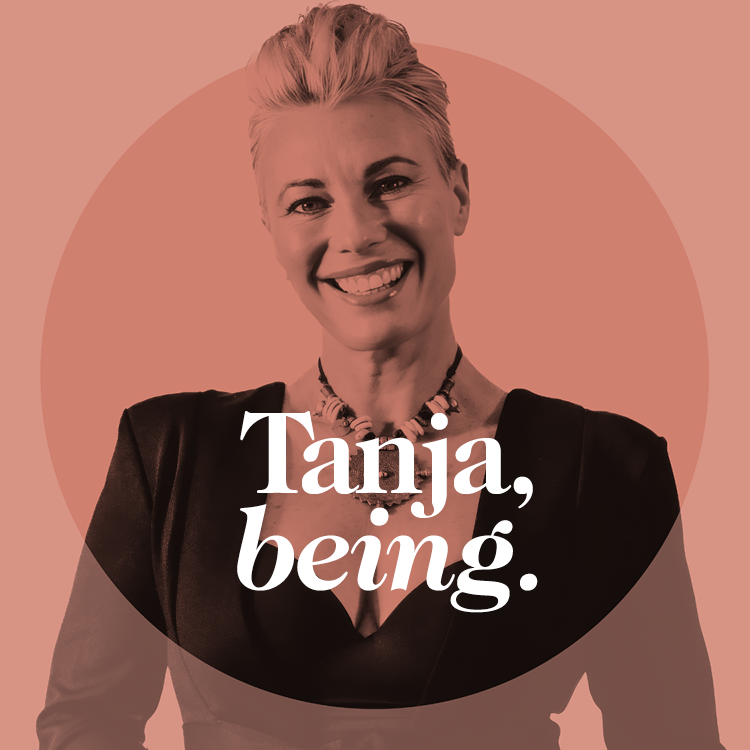
Tanja Lee, on a parent's addiction, breaking the chain, and loving from afar.
In this brave, tender conversation, I sit down with Tanja Lee, mindset and leadership specialist, Chief Energy Officer of The Evolution Agents, and a woman who, at six, lined up her toys in a semicircle to play teacher, something she knew, even then, she was meant to do.
Tanja shares about growing up with a parent living with alcohol addiction, and all she learnt to navigate from having that imprint in her life.
As well as discussing how living with an addict has impacted her, we talk about the moment she became a mum, and the lioness in her finally drew a line. Tanja also brings the science to how we can shift our mindset, heal our past, and create the future we desire.
We explore:
- Loving a parent with addiction, and separating the person from the behaviour
- Why so many children decide their job is to take care of the grown-ups
- Boundaries, distance, and loving someone from afar
- Being addicted to disappointing yourself
- Breath as the very first doorway out of stress and survival
- Breaking the chain so the next generation doesn’t carry it
This topic is one many people may relate to, but what is so beautiful in this conversation is the tools and insights Tanja shares on how we can heal our story and create the life we desire.
About Tanja Lee:
Tanja Lee is the Chief Energy Officer of The Evolution Agents, where she teaches real estate and property leaders how to step out of stress and into their potential, using neuroscience, NLP, and a whole lot of heart. She’s a Neuro Change Solutions consultant personally trained by Dr Joe Dispenza, a HeartMath consultant, a Master NLP Practitioner and Trainer, and a multi-award-winning speaker and coach. She lives in country Victoria with her husband Matt, is mum to two grown daughters, and is the best voice note friend a woman could ask for.
Connect with Tanja:
- Web: theevolutionagents.com
- Instagram: @theevolutionagents
- LinkedIn: Tanja Lee
If this episode hits close to home:
Please reach out to Lifeline on 13 11 14 or lifeline.org.au
Transcript: Tanja Lee on Humans, being.
Lael Stone: Ah, the human experience, with our flaws, our passions, our triggers, our inspirations, and our imprints. If we could see behind everyone’s story, then perhaps what we would have is deep compassion. In this podcast, I get the chance to explore these stories from some truly fascinating people in some honest and heartwarming conversations. And best of all, I get to share these discussions with you. I’m Lael Stone, and this is “Humans, being.”
Welcome to “Humans, being.” I’m Lael Stone. It is a joy to have you here with me. My humanness for this week, and where I’m sitting at the moment, is the dance between the push and pull of life, or you can refer to it as the juggle of all the balls that we have in the air. And I find myself in this period of my life where there is a really big part of me that wants to just sit on my balcony at home and listen to the birds and drink tea and just not say anything.
And then there’s another part of me that’s like, “How do I go change the world?” And how awesome it is that I get to fly around and, and turn up and talk to people and make a difference in their lives. And what’s really, what’s really fascinating for me at the moment is sometimes I am all about the whole, “I really wanna make a difference in the world,” and then other times the pull is just like, “I just don’t wanna say anything anymore. I don’t wanna post anything on social media, and it’s all kinda been said, and I just really, really, really wanna be quiet, you know? And I don’t really wanna say anything anymore.”
And it’s interesting navigating both parts of that. And I wonder if… I actually do know that many people can often feel like that, particularly sometimes if you have to be out there and be big and shiny, then there’s a real pull to wanna come home to be really just introverted and quiet. And I think what I’ve learned over the years is that I can go and do that as long as I make sure I have the quiet at home and I allow myself to have those spaces. But what I am intrigued about is sometimes the feeling of, it’s all kinda been said, and do we need to keep talking about this stuff?
And the amount of noise and information that we’re bombarded with all the time. I mean, there’s plenty of days where I’m like, “I don’t wanna open my phone and see what’s there.” And what I am doing when those feelings come is I actually am not opening my phone, and I’m putting it down, and I’m choosing to go into nature instead and have some quiet until I feel like I’ve got enough bandwidth to open up again. And I know I’m not alone in these feelings, and I’m wondering even as I’m saying this if you feel that push-pull as well, that part that’s like, “Ha, let’s be in the world. Let’s, let’s create some change.
Let’s speak for what needs to be spoken,” and then another part that’s just, it’s all about the stillness. So that’s, that’s what I am dancing with at the moment. That is my humanness that is very alive in my life. Uh, right now, though, I’m not in the let’s just be quiet and still. I’m in the let’s chat because I have an amazing, amazing guest here who I’m also honored to call a very beautiful, dear friend of mine.
I am here with the beautiful Tangela. Welcome, my friend.
Tanja Lee: Oh my God. I, I mean, [chuckles] thank you. You, you sharing your humanness, I’m like, “Me too.”
Lael Stone: Yeah.
Tanja Lee: I mean, we know that ‘cause we talk about l- eight to 10 times a week, but I’m like, “Yes.”
Lael Stone: Yeah.
Tanja Lee: “Yes.”
Lael Stone: Yeah.
Tanja Lee: “I don’t wanna open my phone or be in the world, and then I wanna change the world.”
Lael Stone: Yeah. It’s such an u- I know, I look, uh, you know, I mean, this is a conversation, as you say. We, we’re so lucky we voice note each other a lot. Like, we are like each other’s listening-
Tanja Lee: Yeah
Lael Stone: … partner, business accountability person.
Tanja Lee: Sisters from another mister.
Lael Stone: Yeah. It’s just, it’s so rich. I so value what we have, which we’ve been doing for a few years now, especially as just women in business.
Tanja Lee: Yes.
Lael Stone: Where, you know, y- you’re an entrepreneur, I’m an entrepreneur. We work on our li- our own a lot. Like, we have support things, but we’re often just the ideas and the thoughts and, you know, on our own. So it’s so rich to be able to have someone to just speak that to, who totally just accepts, like, I can turn up and just be like, “Well, this is how shit it feels today.” And then also the parts that are like, “Oh my God, I just got this gig,” or, “I’ve just done a talk to 600 people and it was big,” and, and you champion that in me-
Tanja Lee: 100%
Lael Stone: … all the time, which I just love. Like, you give me the confidence to go and be seen, and, and yet you also understand that just like, “Oh, I can’t talk to anyone. I need to be really quiet,” and what’s the point sometimes.
Tanja Lee: And navigating all the things of ma- a maturing woman in that world.
Lael Stone: Right.
Tanja Lee: We share our, our menopausal journeys of, you know- “I’m not feeling it today,” or, “I’m feeling amazing today.” And I’m, I’m equally grateful that we have this beautiful, delicious relationship where we can just… You know, one of my favorite things that you share and say all the time is, “All of you is welcome here.” And I just feel that. We can champion each other.
We can hold space for each other. We can be vulnerable. And I just wanna say, as I’m sitting here in this beautiful creation, I am so proud.
Lael Stone: [chuckles] Thank you.
Tanja Lee: I am so proud of you. And to you listening or watching, I want you to know, as her sister from another mister, she’s the real deal.
Lael Stone: Aw.
Tanja Lee: What you see is what you get. Who you’re seeing on camera and hearing in your ears right now is, uh, who comes to my house and, in her socks and has a cup of tea with her hubby and Mike. Shout out to Mike and the kids. I’m so proud of you all. Um, I’m, I’m very proud of you.
These are beautiful conversations that need to happen in a world that is so swipe left and swipe right. And as Matt Church says, “Instant coffee isn’t instant enough.” The way you sit and hold space for people to feel safe and seen, so everybody else can hear and see themselves in their vulnerable sharing, it’s medicine. It’s really, it’s medicine. And so I got the goosies just being here with you.
Lael Stone: Thanks, babes. That’s really-
Tanja Lee: Yeah, I love you. I’m proud of you. And I get to see the behind the scenes. Yeah, I get to, I get to see the fragility, uh, behind the, the fierce, courageous, change the world you. And you get to show a bit of that too, but it’s yummy to be here.
Lael Stone: Thank you, babes. Yeah, there’s some funny conversations [both laughing] we have, isn’t there? All right, I’m gonna just read a bit of a bio about my beautiful friend, Tanja, because, um, I, I want you to just hear about who this woman, this woman is. And we’re gonna just… Well, we’re gonna explore some beautiful ground today because, um, not only do you just have so many extraordinary insights that help change people’s lives, but just your own, uh, embodied wisdom of what you’ve navigated in your life, I think is such an important story to share.
So, so let me read this first. Uh, Tanja, uh, I, I love that this is the beginning of your bio. “At six years of age, uh, my next guest used to sit her toys in a semicircle, do roll call, and pretend to be a teacher. And now, a mature woman in her 50s, the mother of two young women, author, and the multi-award-winning chief energy officer of The Evolution Agents is fulfilling that dream by teaching thousands of people how to change. Her life purpose, to inspire people to believe in themselves and fulfill their potential, came through an intuitive hunch at the age of 16.
And since then, she’s devoted her life to studying the art of human mastery, leadership, neurolinguistic programming, and intuitive intelligence. And most recently, she has been personally trained and certified by international best-selling author, researcher, and lecturer, Dr. Joe Dispenza, which I’m sure some of you know about, to teach the proven concepts of neuroscience. However, one of her greatest teachers has been her own life, in particular, the imprints and impacts of living with a parent with addiction and how it shaped her own lack of self-love, self-belief, self-worth, and confidence, something she’s never spoken about publicly, but knows many people are currently navigating that reality too. And she’s here to share her human’s being story of self-sabotage to self-sovereignty through self-awareness and forgiveness.”
And this is my beautiful friend here, Tanja. Uh, thank you, darling. I, I love that intro. That is like, that is very you. That is-
Tanja Lee: [laughs]
Lael Stone: … 100% you. Um, I do really wanna start with just, you know, what you shared with me about your upbringing, your story, um, living with a parent with addiction. And then, you know, we’re gonna move into the transformation and the gifts of what that has shown or given you.
Tanja Lee: Mm-hmm.
Lael Stone: So let’s start, let’s start with where it was for you as a little kid.
Tanja Lee: Well, do you know what, what, uh, before I do that, when I wrote that and sent it to you guys on the plane last night coming from Christchurch to here, 10 minutes after I emailed it to Nadja, your beautiful producer, I had this surge of energy, this heat. I’m like, “What’s this?” And I went, “I can’t share this.”
Lael Stone: Mm-hmm.
Tanja Lee: And I nearly messaged you, actually, at the airport when I was getting my bag around the carousel. I’m like, “I can’t share this.” This is not because of any shame, but what’s… And I was like, “What is this? What’s this energy?
What is coming up here?” ‘Cause I’ve never done this before. Wasn’t insecurity or any of that. And what surfaced was protection. I feel and have always felt protective over my parents.
And it was like, “This is bad to talk about this.” So that little Tanja still, I’m 54 at the time we’re having this conversation, was like, “I can’t share this.” [clears throat] And so I’m like, “Okay, what is this about?” And even last night, as I sat with this insight, I’m like, “Wow, that is one of the ingredients, being a child with a parent with an addiction and all that comes with that, protecting them and their story and their woundology and their experience has been at the sacrifice of myself.” Like, wow.
So thank you for the gift of that lesson ‘cause I don’t know that that would have come unless I had to, you know, prepare for this conversation. And before I talk about my own journey, I do wanna just preface addiction is really something we believe we can’t control, and I wanna separate the person from the behavior, which I know you do all the time. So I’m an only child. I have, uh, two half-brothers and, uh, grew up with two incredible humans who are hardworking, deeply loving, salt of the earth folk who, um, I adore. And one happened to have a pretty significant addiction to alcohol due to a traumatic childhood that they had.
And how that would show up for me was pretty much most weekends there would be an episode of drinking too much and, and all of their darkness and windology would surface. And they were not conscious of how they were behaving. And so I grew up often feeling unsafe because literally their face would change and the way they would look at me, I felt as a child was they were gonna kill me. I didn’t know back then that it was probably their projection of their own fear, ‘cause the life they lived, you wouldn’t wanna read about. You wouldn’t want…
It would be a horror film.
Lael Stone: Yeah.
Tanja Lee: And because at a young age I knew their story and, and the turmoil that they went through, I think I kind of separated from myself and chose to hold space for them and protect them and make their story and their needs or their suffering more important than my own safety. So that’s kinda like… It felt like a sacrifice now that I’m in f- I’m 54. As a kid, I didn’t know what I was doing. What I can see now though was as a result of growing up in fear, not knowing who I was going to meet in the day because of their behavior would change, um, significantly, I would, I would have an inkling when I’d wake up in the morning, I could tell by the way the cutlery was being put in the drawer from the dish.
It was like if it was hard and fast, it would be like it was gonna be a day. If it was more gentle, I’d kind of feel safer. So I was on high alert all the time. And I didn’t feel safe, I didn’t feel seen, and I didn’t feel loved, not because they weren’t loving, but just because the way they would change under the influence of alcohol. And there were so many triggers.
And, and I, at a young age, I would like guard myself when one parent would walk in with the brown bag and the two bottles of red, and I would know when certain music would start to be played where this was going. Uh, so the interesting piece though for me was I didn’t realize that I would go to bed every single night asking myself, “What’s wrong with me? What have I done wrong?” Feeling like I wasn’t good enough, worthy, or deserving because I didn’t get the love and the connection or the safety or the security of what I deeply craved, and I thought it was my fault. Couple that with being told your own birth story that, “Oh, yeah, you know, you nearly killed, you know, y- your, your mum when you were born,” and, “Oh, you were put in a humidity crib ‘cause you were too loud.”
It was just like all the beliefs that I had about myself at a really young age really shaped who I was, influenced how I behaved, and definitely influenced who I became. So, you know, when I believed I wasn’t good enough, worthy, or deserving, and I’d done something wrong or there’s something wrong with me, if I’m thinking those thoughts every night while I’m going to bed and then I wake up in the day, then I’m just viewing life like there’s something wrong with me and I’ve done something wrong. And because I didn’t feel safe, I really didn’t speak. Hard to believe now, I know. [both laughing] Making up for lost time.
But as a child, I, I was bullied all through primary school and high school because I didn’t speak my truth. I didn’t, I didn’t have any bones of courage to stand up for myself. And because I didn’t have a sense of self, I didn’t really fit in. I didn’t belong. So I was bullied and picked on, and I didn’t fit in with the cool kids.
So because I was craving belonging and connection, I hung out with the bad kids, the troubled kids, the tough kids, you know? And I behaved in ways that weren’t true for me. I did things that I knew were wrong, knew were bad, that I didn’t wanna do, but it’s funny what a drought of connection will have you do. And then I grew up believing that I… And becoming someone that didn’t fulfill their potential and held themselves back because of all the beliefs I formed from such a dysfunctional and disconnecting relationship.
So, uh, yeah, it’s been a, a journey. And ironically, yes, as you read, at 16, I had this just clear download, “You’re here to have others believe in themselves and fulfill their potential.” Well, it’s the thing I needed to do for myself-
Lael Stone: Yes
Tanja Lee: … my whole life. And I think it took me a good 50 years [laughs] and a lot of lessons and blessings and, you know, trouble and, and understanding and compassion to, to get to a place where, yeah, I, I, I am good enough, worthy, and deserving, and I, I, I love who I am. And it’s been the biggest initiation of my life.
Lael Stone: Thank you, firstly, for just speaking that, ‘cause I know that’s not an easy story to speak. And I… In hearing your story, I know that many people will be nodding because they know that story. And it may not be because their parent had an addiction, and it may not have been alcohol. It may have been something else.
But that feeling as a child of, “I don’t know what I’m gonna get-”
Tanja Lee: Mm-hmm
Lael Stone: … is so big for so many because, as you say, it put your nervous system on high alert. So you are constantly, no doubt, scanning-
Tanja Lee: Mm-hmm
Lael Stone: … “Where do I have to be? Um, do I need to be small to stay out of trouble? Do I need to, um, be very good to make them okay?” Like, or, you know, for many, many people I’ve worked with, the…
When the parent has, you know, has got a lot of stuff of their own going on, the child learns very, very quickly, “My job is to take care of them, the parent.”
Tanja Lee: Yeah. And that’s a heavy load. … for a little, little person, you know?
Lael Stone: Yeah.
Tanja Lee: And, and we’re not taught the skills of, how do you do that? How do you be with… And, and we don’t know. As kids, we think that our parents have got it all sorted, and they’ve been here before, and they’ve got the playbook, and they got it handled. And then soon enough, you realize, “Oh, no.”
And that, that’s exactly right. I, I then grew up really quickly and became fierce. I mean, you know, my, my mum and dad were hardworking, very salt of the earth humans who, who loved me deeply. I know that. And it wasn’t until one of them was under the influence that that would change, and I knew it wasn’t them.
However, and this is the thing, you know, if I c- if I could offer one thing for people to take away from this conversation, is it’s not what happens to you that defines you. It’s what you decide as a result. And when I was six years old, my parents, ‘cause one of their games was to get ahead in life, you know? They wanted, they wanted to work hard while they were young and fit, and, you know, do their houses up and then get a, a better house. Not, with no mansion, no fancy cars, but just, you know, maybe a bigger backyard or another bedroom.
And I remember coming home from school one day, and Mum and Dad sat me down, and they said, they said, “How was your day?” And I’m like… And it was rare that they were both home, and I was like, “Yeah, good.” I was like six. And, and I can’t remember who it was, but they slid a key over the dining table and said, “Well, you know, so this is a house key, and this is for you because from tomorrow, uh, we may not be here when you wake up, and we may not be here when you come home from school because I’m gonna be working away from home, and I’m gonna be working two jobs.”
And that’s what happened. But what I made it mean was, “Oh, okay, well, I’m not good enough because if I was good enough, they would be home, and we would be having a tea party and talking about my day.” And two, I made it mean, “I’m alone for the rest of my life.” And so then to survive that reality, unbeknownst to me, I armored up, and I was like, “Okay.” And I just became this fiercely independent, driven to succeed, you know, young girl who was just like, “Right, it’s me and the world.”
And so that’s why I, I tried to fit in with anyone to belong, and then I didn’t like school ‘cause I was bullied so much. And so I left and started my career at about 16 and a half, and I, I did very well in work because I just… It felt like the real world. It felt like I could fi- carve a path for myself. But how that decision influenced me was no acknowledgment, no accolade, no…
I was helping businesses grow by, like, 210% per annum. I was doing amazing things. Didn’t feel any of it. Never thought I’d get married. Never thought I was, you know, going to be a mum.
Met my first husband, and he proposes after six days, and we get married three and a half months later. This is shattering all of my belief system. And then, you know, he was a, a good-looking young musician, so he’d be up on stage, and never thought I’d have a baby, and I was told by the gynecologist, “You have polycystic ovaries. You’re gonna never have kids.” Yep, see more evidence of I’m gonna be alone.
Have Kaia. Shout out to Kaia and Amber. Love you. And then I’m dealing with being a new mum, feeling flub-a-dub-a, and, and the father, you know, being on stage with hot tamales who were doing what I’d love to do in another lifetime, which is be a great singer. And I became this, like, jealous, “Are you gonna leave me now for this hot tamale because I’m over here feeling like crap?”
And it was just, it was just… I was so insecure and just ful- a self-fulfilling prophecy, until one day, I started doing some transformational work, and I got to see what happened was I was given a key to open and close a door, and the rest I made up like it was a real-life story. And this is the point, and I, I know what you’re so passionate about is, it’s not what happens to you that defines you. It’s what you decide as a result. And we have decisions about everything.
Every single person we’ve ever interacted with, every object and thing we’ve ever engaged with, every time and place we’ve ever been, we have a decision around, we have an imprint in, and it neurologically and biologically governs who we are. Ooh, don’t get me started. [laughs]
Lael Stone: I’m like, “And here we go.” [laughs]
Tanja Lee: And here we go.
Lael Stone: It’s like, here it is.
Tanja Lee: It’s like, wow, you know? And, and you’re right. So many people are either… You know, you might be listening or watching this, and you have a parent that’s, has some addiction, or you might have a child with an addiction, or a partner, or a friend, or you might be addicted to something that is just really a, a mask or an escape of you trying to resolve some w- wound or pain from the past.
Lael Stone: Yeah.
Tanja Lee: And that’s really why we do it.
Lael Stone: Yeah. And I think, uh, yes.
Tanja Lee: Yeah.
Lael Stone: All, uh, it’s, it’s all there, right? And, you know, I, I wanna come back just a tiny bit to, um… I know people will be listening, will be nodding because they’re like, you know, that, that first piece of having to be good or not knowing what you’re gonna get.
Tanja Lee: Mm-hmm.
Lael Stone: And six, I just, I just have to take a moment for beautiful six-year-old little Tanja-
Tanja Lee: [laughs]
Lael Stone: … being given a key-
Tanja Lee: Yeah
Lael Stone: … coming home from school on her own.
Tanja Lee: Yeah.
Lael Stone: Like, that’s full on.
Tanja Lee: It was big.
Lael Stone: That’s so cool.
Tanja Lee: She was. And, you know, I, I, I’m grateful for the chance to share this story, and I’m grateful for the work I’ve done because I can sit here now, and, you know, there’s a beautiful saying that wisdom is the memory without the emotional charge.
Lael Stone: Mm-hmm.
Tanja Lee: And again, every time I think of that, every time I say it to myself, I get the goosies because h- what a powerful place to be.
Lael Stone: Mm-hmm.
Tanja Lee: And, you know, we didn’t… None of us have come this far to come this far, and when we can learn some new information and learn the skills to rise above our stories and our suffering, that’s how we access wisdom. And I… That’s what my desire for people is to, to, to be wise from our wounds and, and not point the finger. I’m not here pointing the finger at my parent and going, “Oh, um…”
But yeah, was it big? For sure. F- as a six-year-old, of course, I just wanted to come home and be loved and seen and nurtured.
Lael Stone: Yeah.
Tanja Lee: I was nurtured in other ways, but a six-year-old doesn’t know that.
Lael Stone: No.
Tanja Lee: They think there’s something wrong with them.
Lael Stone: Of course. And I think, you know, you’re bringing up that point, and, and I talk a lot about that in parenting, is, you know, not even just that part of the story where the child’s like, “I have to be on my best behavior,” or, you know, “They’re behaving this way because of me.” Often also when we punish and shame kids, then the narrative is not, “I’ve done something wrong,” but, “I am wrong.”
Tanja Lee: That’s right.
Lael Stone: So that becomes the story as well. And, and many… Uh, most people would… Most kids will do that because we don’t know any different. And, and what is the antidote to that?
The antidote is that to have adults who own their behavior, right?
Tanja Lee: Yes.
Lael Stone: I mean, that’s the ideal, right? The ideal is that we have adults that are aware of their behavior, that are accountable for it, that are doing their work, they apologize to their children if there’s ruptures, ‘cause there’s always ruptures. You know, that’s where we start to change this pattern.
Tanja Lee: Mm-hmm.
Lael Stone: But as you say, you know, addiction is, is just often a pushing down of deep pain and trauma.
Tanja Lee: Yeah.
Lael Stone: You know, and addic- addiction looks like many things. It could be drugs, it could be alcohol, it can be working too much.
Tanja Lee: Yeah.
Lael Stone: I mean, we have had conversations, haven’t we?
Tanja Lee: Oh, yeah.
Lael Stone: About our addictions are, “Oh, it’s just easy to hide in work.” Like, “Let’s just be busy.”
Tanja Lee: Yeah.
Lael Stone: Because we get accolades for that, and we get acknowledged for working on-
Tanja Lee: And the dopamine and the serotonin of, of feeling like you’ve been a contribution.
Lael Stone: Yeah. Yeah. So working hard is a, is almost an applauded addiction in our culture.
Tanja Lee: Mm-hmm. Mm-hmm.
Lael Stone: Uh, it can be scrolling on our phones. It can be anything where we are numbing what we’re feeling because the feeling isn’t safe to have.
Tanja Lee: Yeah.
Lael Stone: And again, I, I love that, just how you frame it around your parents, because I know that you sit in a place where you can see them with deep love to go, “They weren’t wrong.”
Tanja Lee: No.
Lael Stone: “They were just doing what they had to do.” And that is something that I say to people all the time. You know, we wanna be able to get to a place, as you are saying, where we can stand and we can see the story that we make it mean.
Tanja Lee: Yeah.
Lael Stone: But also that we can see that our parents were the product of their upbringing, their time, the tools they had, they were doing what they were doing. And part of our big healing is being able to see that.
Tanja Lee: Mm-hmm.
Lael Stone: I mean, it’s also the invitation to feel it first, feel the hurt, the pain, the rage, the upset, the anger, the sadness, the grief. We have to feel those feelings so that we can then allow ourselves to be able to look at those people in our life with an understanding of where they were, you know?
Tanja Lee: Yeah, which is the key to compassion. It’s hard to be compassionate when you’re scared.
Lael Stone: Mm-hmm.
Tanja Lee: When you’re scared of a parent or a friend or a partner or even a child who is, you know, stealing from you and, and i- in some kind of psychosis or drug-induced, you know, change of behavior, it’s hard to be compassionate when you’re in fight-flight-freeze and your brain thinks there’s a saber-toothed tiger chasing you, and it happens to be your son or your daughter or your lover or whoever. So I think, you know, per- cr- you know, it’s like, oh, yeah, you gotta create personal boundaries. Well, how do you do that? Like, how, how do you have compassion for someone you adore or love or cherish, and how do you make it safe for yourself to survive a reality that feels like life and death?
Lael Stone: Yeah.
Tanja Lee: And we’re not taught this in school. I mean, I don’t know when I’ve ever used algebra, for God’s sake, right? Like, what? [chuckles] But if you had have taught me, you know, the art of, of, um, you know, not making a story be my reality, then I would have kinda not suffered for as many years. Uh, so I…
Yeah, it’s important to explore how, how do you be compassionate and cur- curious? And we need to teach people how to do this.
Lael Stone: We do. And I think, look, you know, the first piece that I always say, and I think this is a bit about why I wrote m- my second book and what you’re talking about here, is for me, the first step is that we take a step backwards and we see the story, and we see what we made it mean.
Tanja Lee: Mm-hmm.
Lael Stone: We understand this thing happened, and then I made it mean this, and then they, they are the ripple effects. And as you say, and then you just keep looking for evidence that it’s true.
Tanja Lee: Yeah.
Lael Stone: Right? So we spend a lot of our life just going, “Yeah, that’s… See, that’s why people always make fun of me,” or, “That’s why I’m rejected,” or, “That’s why I can’t get ahead,” or, “That’s why I’ve got this relationship with money,” or whatever it is, because often these stories are so deeply embedded, and they’re often so unconscious, aren’t we?
Tanja Lee: Right.
Lael Stone: We don’t even realize we’ve got those stories sitting there.
Tanja Lee: Well, to that point, 95% of who we are by the time we’re 35 is a set of programs, is our habits, our automatic beliefs, our automatic emotional reactions, our hardwired attitudes, behaviors, and perceptions. So think about that. By the time we’re 35 years old, we’re operating in autopilot. So what does that actually mean? Well, we wake up every day expecting 5% of our conscious awareness to do the heavy lifting of a 95% program.
So if you’re listening to this or watching this and you wanna be fit and exercise, and you even get the gym membership, and you, you know, pack your bags and you have the clothes ready and you’ve meal prepped, but you’ve worked all day and you get home and you… That little voice in your head goes, “Nah.” Like, “You’ve worked hard. Just lie on the couch. Pour yourself a glass of wine.
Go tomorrow. You deserve a break. Tomorrow.” That’s the program. And it could be about anything.
It could be… And I know you’ve had a huge breakthrough in your boom shakalaka on your exercise and loving yourself and your body, which is beautiful. But many of us have programs when we’re unconscious to. I, I didn’t know I had a program, and I was actually addicted to being disappointed in myself.
Lael Stone: Oh, wow.
Tanja Lee: Yeah.
Lael Stone: Tell me about that.
Tanja Lee: And it was through, through learning the work of Dr. Joe and learning about neuroscience that, uh, I, uh, a practice every morning where I journal, and I just write down my old self. How do I no longer wanna… ‘Cause you cannot change what you cannot see. And I, I believe that self-awareness is the key to personal mastery.
So when we can stop and go, “Okay, what are the limiting thoughts that I have?” And I knew I had some. I knew I had a thought I’d, that I wasn’t good enough, worthy, or deserving. So I’m like, “Okay, let me, let me look at this. Let me write down, oh, yeah, I’m not, I’m not good enough, worthy, or deserving.
So when I think those thoughts, how do I act? Well, I don’t finish projects.” God, how many times have you heard me start and s- not finish something? I don’t finish projects. I don’t…
I talk a big game, and I don’t follow through. I said, I said no to being invited to do a TEDx talk in Melbourne ‘cause I didn’t think I… Like, who does that, right? ‘Cause I didn’t think I was good enough. The theme was influence.
I’m like, “Oh, well, I don’t think I’m an influencer, so I, I’m not gonna say yes.” I’ve said no to things that would have excelled me and propelled me to fulfill my desire of being of se- of service at scale. So if I think I’m not good enough, worthy, or deserving, and I’m bad and wrong, then I’m going to hold myself back from opportunities, which I did. I d- I talked a big game, uh, and then didn’t follow through and didn’t complete tasks. And then how did I feel?
Well, I felt disappointed in myself, and I felt frustrated and annoyed and stressed and insecure and insignificant. And what we don’t realize is when we create a state of being, and our state of being is how we think, how we act, and how we feel, when we’re unconscious to that, we then neurochemically condition our body to become that day after day after day. How? Well, we have 60 to 70,000 thoughts a day. 90% of them are the same regurgitated thoughts as the day before, and 70% of the time, we’re in these states of stress and survival. So I’m in a program.
And until you become conscious of your unconscious self, you can’t change anything. I get the goosies every time I think of this. And the irony is most of us, A, don’t like change, and B, only change when something external happens. You get the phone call. You get the diagnosis.
You get the divorce papers. You get the kids telling you, you know, they don’t like you or they don’t remember what you look like. Um, you know, for me, it was just a, a s- a series of incomplete projects, like these beautiful ideas that I, I, you know, kind of semi-birthed but didn’t breastfeed.
Lael Stone: [laughs]
Tanja Lee: And I just orphaned. [both laughing] You know? And I didn’t realize until I got really clear with myself, and I started to do the work, as we say, and I was like, “Right, well, let’s take a look.” And I was like, “Wow.” And then one day, I was journaling, and I just was doing a stream of consciousness, and I saw myself, right, I’m addicted to being disappointed in myself.
And I put the pen down, and I sat back, and I literally just saw my whole life just go… And I saw all the opportunities, all the potentialities, all the broken promises, all the times I didn’t follow through, all the beliefs. I was like, “Wow. Wow.” And I didn’t know.
So then I was like, “Okay, cool. Well, that’s gonna have me be a victim of circumstance. That’s not me being a creator of my reality.” And then I just started practicing what I’ve been learning most of my life. Uh, but I…
To your point before, if you’re unconscious to your unconscious self, you can’t change. And we’re in a program, and we don’t even know it, and we just go about our day doing business as usual until something rocks or shocks us. And, you know, as one of my mentors, Dr. Joe, says, “Yeah, we can change in times of pain and suffering, or we can change in times of joy and inspiration.” And I’d rather do that.
Lael Stone: Mm.
Tanja Lee: And, you know, that’s what I’m kind of super passionate about now is like, let’s not wait for the phone call. Let’s not wait for the diagnosis. Let’s, let’s shift our focus on what do we want. And that takes being responsible.
Lael Stone: It does. And it’s also… I mean, that’s where freedom sits.
Tanja Lee: Right.
Lael Stone: It’s where power and freedom sits.
Tanja Lee: Yep.
Lael Stone: Before we go there, I, I wanna just touch back just one more little piece to, you know, navigating, um, your childhood and, you know, then moving, you know, it sounds like very independent six-year-old, off you go-
Tanja Lee: Yeah
Lael Stone: … [laughs] into the workforce-
Tanja Lee: Yeah
Lael Stone: … and doing your thing, and then navigating all those pieces of, you know, early motherhood, life, business, what- all that kind of stuff. And, and still having to be in relationship with parents, you know, with addiction, stuff like that. And for you, and I know this is gonna look different to everybody, um, who has a parent where they feel they have to be a certain way or they, you know, can’t feel safe, what was it for you that allowed you… I mean, I know a lot of it was your own belief systems and navigating your thoughts around what that means, but just actually being in relationship with your parents. Was it just about having boundaries that felt better for you?
Was it about being able to just be in relationship in a way that, you know, was safe for you as you moved through life? I mean, I don’t think there’s an easy answer to how do you navigate relationship with someone who has got a big addiction. Um, I think it’s gonna look different for everybody.
Tanja Lee: Yeah.
Lael Stone: And I hear so much of your stories about what you made that mean for you.
Tanja Lee: Mm-hmm.
Lael Stone: But I’m just curious as to, you know, has it been a real trial and error for you to learn how to be in a place where it feels okay for you?
Tanja Lee: Yeah. And that took me 50 years to get to, and I don’t want anyone to have to take five decades to get to that place. In full transparency, it… I’m 54 now, uh, but it took me 50 years to get there. How I coped as a kid, you know- What I want to say here is, it’s been my biggest initiation and my greatest teaching because my level of compassion for people is enormous, and I have the capacity, much like you, to hold a safe and sacred space for everybody’s feelings to be felt.
I wouldn’t have been able to do that without that relationship. So, how I coped was, I, for whatever reason, just chose to be compassionate for them. It took me 50 years to learn there’s, “I’m here too, and I can’t, I can’t den- I can’t deny or ignore this anymore.” And it didn’t, m- my awareness to my own needs didn’t surface until it erupted.
Lael Stone: Yeah.
Tanja Lee: Because I didn’t say anything. I never spoke my truth. I never fought back. That wasn’t my style. I was afraid.
I, I, um, and unfortunately, when, when my parent drank, it would often be to a point where they didn’t remember, and so they would wake up the next morning having no idea what rolled out the night before, and I never told them. So, it was like I was living this movie over and over and over that I couldn’t stop playing. And so, um, one way I coped was, I think, compartmentalizing myself and making them a priority. That worked for a while. Then I threw myself into work, and they moved geographically when I was six and a ha- uh, 16 and a half, so I was living on my own.
I started kind of my own life at a very young age. So, the distance helped. I wasn’t living with them, right? So, that definitely helped. But then when I went to visit, which was like maybe once a year, it, it was still happening.
When I became a mother, it’s when it started to shift, uh, because, yeah, the lioness in me started to emerge, and it was like, “Okay, I sacrificed myself as a child to protect my parent.”
Lael Stone: Yeah.
Tanja Lee: But when I became a parent, now I felt like, “Oh, no, I’ve got cubs. Now I need to protect them.” And it wasn’t until, um, a, a pretty significant episode happened at my home and, uh, where my kids were, and that’s when I drew a very clear boundary, and I requested that they leave my house. It was the hardest thing I’ve ever done. And then since then, uh, it was, yeah, just, uh, I needed some distance.
We did have a conversation where we brought it to this parent’s awareness, but there was no real ownership of it. Their, their life, their trauma is so significant that, um, they’re in it.
Lael Stone: Mm-hmm.
Tanja Lee: And I think I also spent a lot of my life trying to fix them and try to help them and guide them to different s- um, opportunities or services or, um, chances to heal, some of which they did. And, uh, one in particular w- you know, experience for them was a huge shift, uh, and then, um, yeah, and then kind of went back to old ways. So, um, my, my answer now and, and four years ago was to disconnect because I, um, I love them fully, but I’ve come to a point in myself where I love myself, and I’ve needed to make that a priority too, and that’s how I’ve coped with it. And then I just got really responsible for healing myself.
Lael Stone: Yeah.
Tanja Lee: And, you know, I don’t blame them for how I am or who I was. Uh, if anything, I bow down to them because I chose them, is my belief, and through my interaction with them, I’ve, I’ve, I’ve turned out all right. I- I’m pretty good with people. I’m, I’m not great at many things, but I’m pretty all right with being with people.
Lael Stone: Yeah. Oh, you are. You are. I, I really just hold, um, for anybody, the pain that can come by being in relationship with people where it is painful.
Tanja Lee: Mm-hmm. Or unsafe.
Lael Stone: And unsafe. And there, sometimes the absolute wisdom is complete disconnection.
Tanja Lee: Mm-hmm.
Lael Stone: Uh, sometimes it is, as you say, standing up and saying, “No, this is not okay,” and actually calling the boundary because, you know, for many children and people who are still into adulthood but are still the child of someone like that, they will still make it okay for the parent, you know, instead of actually making it okay for themselves. We’re very conditioned to do that. It’s not uncommon. It’s not unusual at all because there’s the, still the little child in us that’s like, “I still want your love, and I still want you to see me.” Like, it’s a big part of healing our stories, isn’t it?
And that, that inner child piece. And, you know, I, I just wanna say too, you know, there’s a grief that comes-
Tanja Lee: Mm-hmm
Lael Stone: … and this is not just with a parent with an addiction, but there’s a grief that comes for most people when they start to really look at their stories, when they realize, “I am never gonna get the parent that I want.”
Tanja Lee: Yeah.
Lael Stone: You know? That they are not gonna be able to turn up for me in the way that I deeply want. And there’s a grief that has to be felt around that.
Tanja Lee: Oh, my Lord. So is. And that takes time too. And, and I would say, having lived that grief for a long time, ‘cause my life was not a Johnson & Johnson commercial, right? [chuckles] What I thought as a child, ‘cause that’s what we saw, uh, at, by any means.
Uh, that one of the biggest accesses for transformation is acceptance. Now, acceptance of what is. It’s not like accept under sufferance, but when we accept that they are the way they are and they’re not the way they’re not, then we’re in congruence with what is. A lot of my struggle was I really didn’t accept. I mean, I didn’t, I didn’t know any better.
I wanted to change it, as we all do. We are with the best intentions. We want, we want to fix and change, and we don’t want them to suffer, and we don’t want to suffer, and we, we project our own needs onto other people. Uh, but when I stopped protecting them and sacrificing myself, and that took years, and then I started to take care of my own needs, which only surfaced when I became a mother, then I started to prioritize differently. And then it was like, “Okay, well, I’ve offered all of these things, and they’re still not going down that path.
I c- like, I have to accept what is. They are the way they are. They’re not the way they’re not. I love them regardless. However, I gotta…
I can’t control that. I have to now take care of me and my own woundology and my own shortcomings, my own insecurities, my own beliefs, behaviors, and who I’ve become.”
Lael Stone: Mm-hmm.
Tanja Lee: Because now, what I am proud of in this whole initiation is I broke the chain.
Lael Stone: Yes.
Tanja Lee: Because my parent had chronically addicted parents, who no doubt had chronically addicted parents. So, you know, I… Whatever [chuckles] occurred in me to break the chain and have the consciousness to be able to go, “I am not gonna be, I’m not gonna be passing that lineage on,” that is something I’m deeply proud of, ‘cause I’ve done the work to be able to go, “Yeah.” And I’ve got addictive behaviors. I’ve been…
I’ve had addictions of my own. But to be able to go, “Yeah, no, I’ve got a, uh, there’s something truer for me to, to pursue.” And then, yeah, just drawing that healthy boundary and loving them from afar. But when we… I think from my own experience, and certainly studying NLP or neurolinguistic programming and neuroscience, if we don’t accept what is, we’re not congruent with what is, and then we’re always in conflict with what is.
That’s a fast track to being in stress and survival, where you’re not in alignment with reality. That means every single day, every person, every object, everything, every time and place you go, you’re not in alignment with what is. So you’re sending your s- your nervous system a signal, “It’s not safe.” That’s, that’s a tricky road to navigate.
Lael Stone: The safe thing is massive for most people, right? And I think they don’t even realize that they don’t feel safe.
Tanja Lee: That’s right.
Lael Stone: They just, they’re so used to a level of this, um, hypervigilance that they actually aren’t even aware that there, there’s a baseline that, you know… So for anyone that does feel like that, and I know a lot of people operate on that level because they’re stressed, they’ve got a lot of balls in the air, or it’s just their programming and upbringing. Like, what’s your first invitation? When you are in that, like, where do we start?
Tanja Lee: [chuckles] Such a, it’s such a great question, and you’re right. We operate at this, and this becomes the new normal.
Lael Stone: Mm-hmm.
Tanja Lee: We think this is normal. Those altered states of being aren’t normal. They’re altered. The very first place to begin is the breath, returning back to our breath. Breathing, and a certain type of breathing, is the fastest way to get back into homeostasis, back into balance and order, out of fight, flight, freeze.
Because when we’re stressed, think about what’s happening. Our pupils are dilating to let more light in because we have to see where the saber-toothed tiger is, and we gotta run, fight it, or go in the cave. Our salivary glands, uh, dry up, and we don’t produce saliva ‘cause this is not the time to ingest or digest any foreign matter. Our heart rate increases. Our blood pressure rises.
Our respiratory system is compromised, and vital blood that is feeding our internal organs gets shunted to the extremities of our body. So we are on high alert. The brain is always checking in on the body. “How you going down there, you know, body?” So the brain’s always checking in on the heart.
“How you going down there, heart?” And the heart’s like, “Yeah, I’m pretty stressed. I’m pretty scared. This doesn’t feel safe.” Brain goes, “Cool.
Let me go onto high alert.” And so when we’re in that high alert state, we’re out of coherence. And when the brain i- uh, the heart is irregular and the brain is irregular and we’re out of coherence, we don’t feel safe. We are in stress and survival. And [clears throat] the fastest way to return back to balance and order and regulate ourselves is to breathe.
And we encourage in, in, um, NeuroChange Solutions to, if you can, if you’re not operating heavy machinery or driving a car, to close your eyes, to disconnect from the external environment, because billions of pieces of information are hitting your neocortex that your brain’s trying to process. So when you shut that out and just go internally and disconnect from third dimension, third dimensional reality, and you return to your heart, and you just bring [exhales] your awareness into your heart or chest area, and you breathe slower and deeper than usual, at a rhythm that’s just really comfortable for you, and you just do that. This is a proven method from HeartMath Institute, which I’ve been certified to teach the science and practice of heart coherence. You breathe into your heart, disconnect from the world, slower and deeper than usual, at a, at a rhythm that’s comfortable for you. And then if you can generate a, a renewal state, such as appreciation or care or compassion or gratitude, just a feel-good emotion, and you radiate that to yourself and to others, well, then the heart is going to become coherent, and the heart will relax.
And when the heart’s relaxed and it feels safe, the brain’s checking in, “How you going down there, heart?” Heart’s like, “Oh, yeah, I feel good. I feel safe. This is okay.” Brain goes, [exhales] “Good.
Okay. Awesome. Let me get into the…” Oh, getting goosies. “Let me become the creator again.
Let me be present.” Let me stop worrying about the past and anticipating the worst-case scenario. Let me be here now because it’s safe, and then we can actually create something new. And this is why I studied this work and am teaching it now. It’s because it is so simple, and we’re not taught it.
It’s simple, not easy. Not easy, but worth it. If we all could just breathe, and if we all could be responsible, what does that mean? When we’re sitting in the distinction of being responsible, we’re telling ourselves, “I’m able to respond.” That’s what it means, because we’re reaction machines in stress and survival, reacting to every person and every object, everything, every time and place, every meeting and everywhere we’re going.
We’re just reacting to what is through our lens. But where we can go, “Okay, cool. Let me be respon- let me be responsible for my thoughts, for my actions and my feelings, and let me connect to my breath and just get out of stress and survival and be here,” that is a great place to start. And that’s, uh, access to personal mastery, is our breath. That would be the thing I would say.
And, and I know [chuckles] that there will be people watching and hearing this go, [lip smack] “Breath work, that is for matcha-drinking, Lycra-wearing yogis. That’s not for me. Give me the s- give me the strategy. Give me the thing.” Or it feels more comfortable judging others and blaming others and blaming the global economy and the cost of living and diesel prices.
I know, I have a diesel car. You know, it’s easy to point the finger, but then there’s three pointing back called me, myself, and I. And when we can get more curious about this and less about the problems out there, and we just can breathe, well, then we’re back in homeostasis, back in balance and order, and we can function, uh, more clearly, and we get out of survival. Living in stress is living in survival, and we’re no good to ourselves or anyone. And it’s not a matter of if we get sick or worse.
It’s a matter of when, because no organism is designed to live in emergency mode 24/7.
Lael Stone: Yeah. And we just… We are. I mean, I think that’s the current state of our world right now.
Tanja Lee: Yeah.
Lael Stone: Everybody’s nervous system is pinging because, well, again, we’ve, we kind of have created a reality where it’s fast and it’s so much information and, and, you know, I think we’ve just… That’s become our baseline, as you’re talking about. And, you know what strikes me, and, uh, you know, I’m a big fan of the breath. I, I, I taught breathing for many years in birth. I saw the power of breath in-
Tanja Lee: Mm-hmm
Lael Stone: … when I worked in birth. Um, I know how powerful it can be, but what I often see with people is, it’s very simple, but as you say, it takes practice.
Tanja Lee: It does.
Lael Stone: And people don’t wanna do the practice. [chuckles]
Tanja Lee: Yeah. No.
Lael Stone: They want a quick ru- they want a quick-
Tanja Lee: We want a pill. Yeah.
Lael Stone: We want, “Give me a tablet-”
Tanja Lee: Yeah.
Lael Stone: “… to take me out of stress.” And, you know, look, again, I’m all open for what works for you, right? But what I have seen with humans, which I’m sure you have as well, is we are so quick to go, “Can you just make it better?” Like this. “Tell me the one, two, three magic step, and then I’ll me- fix it,” right?
Tanja Lee: Yeah.
Lael Stone: Tell me that with my kids. “What do I have to do so it stops them doing this, stops them doing that?”
Tanja Lee: That’s right.
Lael Stone: And we, we are hardwired to just kinda look at that, to go, “I just want the fix quickly.” But-
Tanja Lee: Yeah
Lael Stone: … the work of being patient and the work of, um, of just going, “This is hard, and maybe it’s boring, and I don’t wanna do it, but I’m gonna keep practicing it.”
Tanja Lee: Yeah.
Lael Stone: “And I’m gonna keep practicing,” ‘cause it’s like going to the gym. You can’t just wake up and go, “I want muscles. I wanna lose 10 kilos,” and just sitting there thinking about it. It’s not necessarily gonna happen.
You have to keep doing it, and you gotta turn up, and there’s the consistency, and there’s the dedication to it. And, um, and, you know, that is s- this simple, simple, simple technique is, it does take a bit of practice.
Tanja Lee: It does. I like to call it devotion, because, you know, d- people are like, “I, I don’t like discipline.” I’m like, “No, discipline feels like hard work, and it’s not fun.” But when you’re devoted to something, you’re pouring your heart into it. You’ll, you love what you do.
So, you… It’s a choice. And, and you’re right. People, you know, when they do breath work or meditation, they think they’re doing it wrong when they stop to meditate and disconnect. And to meditate, the Tibetan translation is to become familiar with.
So what, what do we wanna become familiar with? We wanna become familiar with the 60 to 70,000 thoughts we’re having a day, the program that’s 95% of who we are, because we cannot change what we cannot see. And as Dr. Joe says, there is no bad meditation. People think they’re doing it wrong when they sit down and close their eyes and distract and, and go within and just observe their thoughts, and they have a gazillion thoughts.
They go, “Oh, I can’t do this. This sucks. I’m, I’m, I’m bad.” And they get up and go make a coffee and go about their day. You’re actually doing it right.
You’re actua- if you can sit down, think about this. If you can sit down and you are witnessing your thoughts, you can see the program, you’re no longer in the program, and that’s what we call metacognition. It’s the ability to be able to think about what you’re thinking about. You can’t change unless you can think about what you’re thinking about. Now, now it’s getting really real, and you go, “Oh, I’m addicted to being disappointed in myself.
I had no idea. I had no idea. Now I can change. Now I can think a new thought.” So, the breath work is the first piece to get back into a state of coherence, because when we’re in stress and survival, we’re in that program 95% of the time.
The next piece is metacognition, getting into that state of stillness and becoming the observer of your mind and seeing what’s got your attention and where your thoughts are going, ‘cause our thoughts and words create our world. Oh, okay, so look at the quality of what I’m thinking. And then the next piece is starting to get clear about, okay, well, what am I thinking? Even write it down. How am, how is that making me act and behave?
Get straight with yourself. How’s that making me feel? Those feelings and emotions are producing chemicals, hormones, and I’m either flooding my body with cortisol and adrenaline or dopamine, serotonin. Which one would you prefer? I know what I’d prefer.
And it’s like, okay, cool. Am I committed to that? Well, no. What, what am I committed to? And then you wanna start creating, well, how do you wanna think about this thing?
We try to change everything and everyone else around us rather than going, “Okay, I don’t wanna think that way anymore. I don’t wanna show up that way. I don’t wanna treat myself that way or others. How do I wanna think? How do I wanna act, and how do I wanna feel?”
And you can literally create a whole new state. But you can’t do that if you don’t stop the craziness and pause and breathe and get into alignment and get out of the program. And the beautiful thing about this work is you can teach yourself how to go from 5% conscious awareness, trying to lift a 95% program, to switching on the frontal lobe, the boss, the CEO, the, the conductor of the great symphony of your mind. This is the part of the brain where you are the creator, and you can ask yourself questions of, “What would it be like to, you know, be happy? What would it be like to be healthy?
What would it be like to be the greatest expression of myself?” And just like ChatGPT, it will scan all the history of the artifact of your mind, the autobiographical you, and it will curate answers and lay it down for you to be the creator of your own reality. But if you don’t stop and breathe and think about what you’re thinking about and get responsible, not responsible like, “I’m at fault and I’m to blame,” and crack that guilt whip that we can do. No, no, no, no. Just now it’s time to wave the wand and get clear about what do you wanna create?
‘Cause most of us are living a life where we’re being a victim of circumstance. We think life is happening to us. When we can stop and breathe, practice metacognition, and then mentally rehearse how we do wanna think, how we do wanna act, and how we do wanna feel, here’s the beautiful thing. The brain and the body are so objective, they don’t know the difference between a real-life situation happening or one that is imagined. And if we are thinking about the memories of the past or anticipating worst-case scenario in the future, we are knocking ourselves into stress by our thought alone.
Lael Stone: Mm-hmm.
Tanja Lee: Well, we can knock ourselves into greatness, into homeostasis, into balance and order by thought alone.
Lael Stone: Yeah. Yeah. And I mean, God, we need to hear this 10,000 times.
Tanja Lee: Yeah.
Lael Stone: Because we are so conditioned, aren’t we, to go worst-case scenario, this is what’s wrong. We play the loop. We play the loop of the evidence of what we think is true. It is, a- and, you know, one of my favorite sayings, I say it all the time, “What do I want this to look like? What do I want this to look like?”
Tanja Lee: Well, and look at you. You’re a master creator. One of the things I celebrate about you, you’re like, “Oh, I just, I wanna have this.” And then you’ll, you’ll message me a few days later, “Guess just what happened,” or, “This just came up,” or, and I’m like, “Of course.” Where attention goes, energy flows.
But stress is caused by the perception that things are gonna get worse, losing control, and not being able to predict the next moment.
Lael Stone: Yes.
Tanja Lee: And when we’re in those states where we try to control everything and everyone, we try to predict the next moment, and we spend our time imagining the worst-case scenario. Why? When you’re in stress and survival, if you can imagine the worst-case scenario, anything less than that, you’ve got a greater chance of surviving. So your brain is doing what it’s designed to do. But what you’re not aware of is you’re neurochemically conditioning your body to act like there’s a saber-toothed tiger, and then giving your power to external things to feel better, and that’s why we are doomscrolling our life away.
It’s the modern-day fire gazing that cavemen and women used to do. When we watched the flicker of a flame, our nervous system would regulate after weaving the baskets and chasing the bison and bringing it back to the cave. Now, the modern-day fire gazing is this. But every single swipe, every single like, every single comment is a, is a decision. And 30 seconds into waking where we start a new day, most people go to their device and they’re lost in somebody else’s agenda, and we haven’t consciously created who we are in the day, and then we’re on autopilot, living the same day we did yesterday, last week, last month, last decade, 50 years ago.
Lael Stone: Mm-hmm.
Tanja Lee: And then most of us, unfortunately, die with our potential intact, unf- uh, unfulfilling the very thing that they came here to fulfill. And it’s like, yeah, well, we got work to do.
Lael Stone: We have got work to do. And I, you know, what I love about this so much, because I, I am, I’m a big fan of this. Like, I, I feel like, I mean, we talk about this stuff all the time. I feel like I have, um, really, you know, in the last maybe 10 or so years, really tried to live my life in this way of being very intentional-
Tanja Lee: Yeah. You do
Lael Stone: … watching my thoughts, being really curious about what it is. You know, I am a big fan of the curiosity always. What am I making this mean? What do I want it to look like? Like, all, you know, they’re my two favorite questions I ask all the time.
Tanja Lee: Yeah.
Lael Stone: Because I’m just like, ”Where am I in this story that I’m running-
Tanja Lee: That’s right
Lael Stone: … of my life? Where am I in this?” And, you know, what I see, and, and we, we talk about this often, I mean, this, you know, one of my biggest values in my life is freedom.
Tanja Lee: I know.
Lael Stone: It’s like, for me, like you asked me, “What’s up the top?” I’m like, “To live a free life.”
Tanja Lee: Yeah.
Lael Stone: Where I get to choose what I do, I get to, I, you know, I have, I’ve created a life where I can be free to, to be who I need to be. I don’t like being locked into anything. That’s why I’ve never worked for anyone. [chuckles] I’ve been, like, run my own businesses since I was 20. Like, I just, I need the freedom to move how I wanna be, and it’s my highest value.
And for me, being able to be aware of this stuff speaks to the freedom.
Tanja Lee: Yes.
Lael Stone: Because I, I go, I… Life happens and shit happens.
Tanja Lee: Shit happens.
Lael Stone: Hard stuff has happened. Yeah. I’ve had, I’ve had my traumas. I like, you know, there’s no perfect life, right? We’ve, we all- The heart can be an absolute gift, but it’s how we look at it, right?
Tanja Lee: Mm-hmm.
Lael Stone: And I think, and I, and I bless my mom, shout out to Barb, for really-
Tanja Lee: Go Barb
Lael Stone: … knowing this from a young age, right? It, and different, not so much the neuroscience of it, but from a more spiritual perspective.
Tanja Lee: Yeah.
Lael Stone: She knew this from when she was younger and would often say to me, “You know, you create your reality on some level.” Like, “So what’s going on here? What are you, what are you-”
Tanja Lee: On every-
Lael Stone: “… what is the gift here? What’s the gift here? What’s this person bringing you?” So, that was something that I knew about from a young age and would play with, you know, even in my early 20s, and it’s been something that’s very ingrained in me. So it’s, it’s not…
It’s rare if something bad happens or something goes on that I go, “Oh, it’s not fair.” Like, I can initially have a reaction to it.
Tanja Lee: Sure.
Lael Stone: But then I’m always like, “All right. What’s this about? There’s something gotta shift and move here.”
Tanja Lee: Yeah.
Lael Stone: “What is here for me? What am I making it mean?” I mean, you know when I was writing my book [laughs] ‘cause I voice note you a lot.
Tanja Lee: [laughs]
Lael Stone: That I had a lot of feelings come up around that process because it tapped me 100% into my own story of I’m not smart enough.
Tanja Lee: Yep.
Lael Stone: And I’ve spoken about this before. So that was the loop that was playing, right? And so it just kept popping up and popping up, and I would voice note you, and I’d be like, “Fuck.”
Tanja Lee: [laughs] All the things.
Lael Stone: Yeah. But I could see it.
Tanja Lee: Yeah.
Lael Stone: I could see the story.
Tanja Lee: Yeah.
Lael Stone: I was hooked into it. I would then be aware of it. I was able to put it down. I’d be like, “What do I want this to look like? Where do I wanna sit with it?”
Those kind of things. And I would see the shift with it.
Tanja Lee: Yes.
Lael Stone: And I think for me, again, I come back to this is how we get to live our most powerful life because-
Tanja Lee: And free life, to your point.
Lael Stone: And, and ‘cause the thing that you just said then, which is the part that kind of breaks my heart, is when we aren’t able to be, to move into this, we are limiting the potential of the magic of our lives.
Tanja Lee: Yeah.
Lael Stone: Because there, every one of us has something that is magical and a gift and something that we’re here to do.
Tanja Lee: Yeah.
Lael Stone: And when we are so locked in with these imprints, beliefs, stories, ways of thinking, we limit not only us fulfilling that potential, but the benefits the world gets from who we are meant to be.
Tanja Lee: Exactly. Exactly. And, you know, we’re here to be humans being, and we’re humans doing.
Lael Stone: Yeah.
Tanja Lee: Doing everything we believe we need to do to survive this reality of life that doesn’t feel safe. And, you know, I’m fortunate enough to have had the honor and privilege to have spent time with thousands of people individually or in community or organizations, and there are three fundamental beliefs that you could, you could put it in a big funnel and just sift it all down to one. Uh, you know, one for ourselves, one for others, and the world. And here’s what I’ve learned in my experience. The core belief we all have is, “I’m not good enough, others are better than me, and the world’s not fair and scary.”
And that is it. That’s our viewfinder of life, and it’s really, really hard to see anything else. And so if that’s our core belief system, then we are just surviving that reality. And often, it then, we become unconscious to it, and then it’s only when something external happens that we get a wake-up call to go, “What am I doing with my life?” And then we ask the big questions of, “What am I doing?”
But we put the power in things externally. And like you, you know, I believe the world would be a happier, healthier, more compassionate, creative, abundant, flourishing environment if we got out of that state and became conscious humans being responsible for themselves, their thoughts, their actions, their feelings, stopped pointing the finger and got curious about me, myself, and I, didn’t crack the guilt whip, and didn’t spend time in the suffering, and literally became the author, no longer the story of their life. And to me, that is a worthy endeavor and a noble pursuit that we all, if I could cast an invitation, that we all get interested in doing. And you don’t have to do it alone. That’s the beautiful thing.
Who you surround yourself with really matters. And, you know, this is one of the reasons I’m so grateful and deeply, uh, joyful in our friendship is we champion each other, we hold space for our windology, we don’t let each other get, uh, collude and get slippery with each other, uh, because it’s easy to be a victim. It’s easy to have an itty-bitty shitty committee with yourself and invite your friends to come and toast misery marshmallows around the campfire. It’s easy. It takes something to be courageous.
It takes something to have faith in yourself and others when you, they’ve hurt you. But I, I don’t think we should quit on ourselves or each other just yet. I think there’s more to us being human and us humans being than we’re even remotely aware of, and all we need to do is be compassionate with ourselves and others and get curious in what we’re capable of.
Lael Stone: Let’s just all take a very deep breath now. [laughs]
Tanja Lee: Man, that’s my, that’s my little-
Lael Stone: There you go. There’s your mic drop. [laughs]
Tanja Lee: That’s my, that’s my, that’s my two cents.
Lael Stone: Your story of your upbringing and your parents and all that happened, um, I know is part of your journey.
Tanja Lee: Mm-hmm.
Lael Stone: And because of it, though, it’s like, uh, what a gift that you get to sit here and share this knowledge with people.
Tanja Lee: Mm-hmm.
Lael Stone: And I am so grateful for your courage, of your willingness to do your work. I know that one of the things that is so important for you is of being of service to others-
Tanja Lee: Mm-hmm
Lael Stone: … to help them remember who they are.
Tanja Lee: Oh my God, yeah.
Lael Stone: To wake them up.
Tanja Lee: Mm-hmm.
Lael Stone: To show them the potential and the possibility of what exists for them.
Tanja Lee: Mm-hmm.
Lael Stone: And- And I see you do that all the time. I see how many people are touched by your work. And I just wanna honor you and little Tanja-
Tanja Lee: Mm-hmm
Lael Stone: … and the key-
Tanja Lee: Mm-hmm
Lael Stone: … and your parents for, for all that was the story that allows you to now be here to make a change-
Tanja Lee: Mm-hmm
Lael Stone: … for many humans in the world. So thank you. Thank you for being my friend, but also-
Tanja Lee: Pleasure
Lael Stone: … I mean, you’ve taught me so much, but, but also just thank you for the gift of what you give to the world.
Tanja Lee: Thank you.
Lael Stone: Um, as we finish up, what would you like people to know about what you’ve got going on? How can people find you? Sh- share how they can get some information.
Tanja Lee: Yeah, thank you. Well, thank you for the opportunity. Thank you for those kind words. And I just wanna throw in, you know, I, I haven’t arrived anywhere either. Uh, I have the privilege of working with a lot of people, but I see myself as a perfectly imperfect, consistent work in progress.
And that’s my invitation for others just to see themselves the same. Uh, so, you know, if, if that resonates with you and, and you wanna learn more or learn a bit about neuroscience, which is just the study of how our brain and nervous system influence the way we think, the way we act, the way we feel, how we interact or more so react to our environment, uh, you can find me on, um, Instagram, The Evolution Agents. Uh, our website is The Evolution Agents. And then, of course, just Tanja Lee on LinkedIn. Choose your own adventure.
You will see a lot of the work that we do is, uh, really niched into real estate and property. Uh, that’s because I was simply a consumer who was really underwhelmed with the experience of listing and selling my family home, and it just felt really transactional. So we’re doing some work to change an entire industry and make it relational. Uh, but please don’t think you have to be a real estate or property professional to connect. If there’s something I’ve shared about living with someone with addiction or the tools and resources I use, or you wanna learn more particularly about Dr.
Joe Dispenza’s work and how that’s changed my life and my clients’ life, just reach out on any platform, and I’d be honored to have a conversation and just provide a raft for your evolution and, and us evolving together.
Lael Stone: Ah. I just, uh, thank you. And, and we’re doing this a lot. We’re, we’re very-
Tanja Lee: We-
Lael Stone: It just feels like this is very serious and, you know, half… We have a good laugh too, and we get up to some mischief and cheeky times, but I feel like we, we’re giving our serious heart, heart-centered selves today. [laughing]
Tanja Lee: [laughing]
Lael Stone: So we are. Um, please, uh, Tanja’s, all Tanja’s details will be in the show notes as well. Um, for me, you know, what I really hope people, um, take away from this episode is that change is possible.
Tanja Lee: Mm-hmm.
Lael Stone: And that it just takes a little bit of courage to understand our story and where we’ve come from, and that, you know, all the possibilities exist for us.
Tanja Lee: Yeah. It’s time to be the author, not the story.
Lael Stone: Yes. Amazing. Thanks for being here, babe.
Tanja Lee: I love you.
Lael Stone: Me too. Thanks for sharing this time with me. You can find my book, “Own Your Story,” at bookshops or listen to the audiobook on Audible. I even read it myself. You can stay connected with Humans, being. on Instagram, Facebook, or YouTube.
We love to hear from you, so please leave a comment, question, or contemplation. And visit my website, leylstone.com.au, where you’ll find lots of great resources and courses for you to explore. This podcast is produced by Nigel Carboon, recorded by the crew at We Make Online Videos, designed by Mike Gaál, and our original music is created by Josh Reed.
Humans, being.™ is produced on the lands of the Bunurong and Wathaurong people. We pay respect to their unique and diverse cultures and to elders past, present and future.
Until next time, stay connected and don’t forget to be human.